Perkins Engine Identification Guide
Locating the complete Perkins engine number is essential before requesting replacement diesel engine parts, diesel engine overhaul kits, or individual engine components. Similar Perkins engines may use different pistons, piston rings, cylinder liners, bearings, gaskets, seals, fuel injectors, water pumps, thermostats, crankshafts, and related parts. For rebuilders, repair facilities, distributors, equipment service companies, and other commercial buyers, a model name alone is often not enough to confirm the correct kit or component.
Commercial buyers, fleet managers, engine rebuilders, and service facilities use the complete engine serial number to:
- Confirm the exact Perkins engine model or series
- Identify the specific family or type code
- Verify build specification details and internal clearances
- Check the serial or production sequence
- Match the correct replacement parts or overhaul kit
- Prevent ordering errors and unnecessary shipping delays
Maxiforce supports searches by engine brand, machine brand, product category, model number, part number, OEM reference number, or keyword. For immediate Perkins parts support, cross-reference the Perkins Engine Application Chart, search the Perkins replacement-parts catalog, or Contact Maxiforce Support with the complete engine number.
Why the Perkins Engine Number Matters
A Perkins engine number provides specific build data critical for accurate parts selection. Two engines sharing an identical series name often utilize different internal components based on build date, operating application, fuel delivery system, or emissions tier.
Verifying the full block number prevents common commercial purchasing mistakes, such as:
- Ordering a kit based solely on an engine family designation
- Missing subtle build-code variations
- Confusing the machine/chassis model with the engine model
- Mistaking a component casting mark for the engine serial number
- Selecting parts prior to verifying bore diameter, piston profile, or application specs
Record the complete Perkins engine number exactly as stamped on the engine tag or block prior to submitting a parts request. Do not shorten or truncate the number.
Step-by-Step Perkins Engine Identification Process
Follow these steps to identify your engine before placing an order:
- Locate the engine identification plate, label, or stamped block number. Inspect the engine block directly instead of relying on chassis tags, equipment frames, or service manuals.
- Record the complete number string. Include every letter, digit, space, dash, and suffix. Take a clear photograph of the tag before cleaning or repainting the area.
- Determine whether the engine uses a pre-1978 or post-1978 format. Perkins revised its numbering standards in 1978. Identification methods for both eras are detailed below.
- Cross-reference the family/type code. For post-1978 engines, the initial letters establish the engine family and series. Match these against the family code table below.
- Submit full technical details to Maxiforce. Provide the complete engine number, machine make and model, application type, and any known OEM part numbers to confirm component fitment.
Pre-1978 Perkins Engine Numbers
Engines produced between 1966 and 1978 utilize a maximum 13-digit numbering system. Engines manufactured prior to 1966 used a simplified sequential digit format without embedded series codes.
Verify pre-1978 engine numbers carefully. Older machinery may have undergone engine swaps, field repowers, or complete rebuilds that no longer match factory build sheets. When servicing a pre-1978 unit, record the full stamped number and capture clear photos of the engine data tag.
Additional verification parameters for older engines include:
- Equipment make, model, and machine serial number
- Operating application (agricultural, industrial, marine, or power gen)
- Piston top profiles, liner flange dimensions, or bearing undersizes
- Existing Maxiforce part numbers or OEM reference codes
- Rebuilder tags or remanufactured identification plates

Current (post 1978) Engine Numbers:

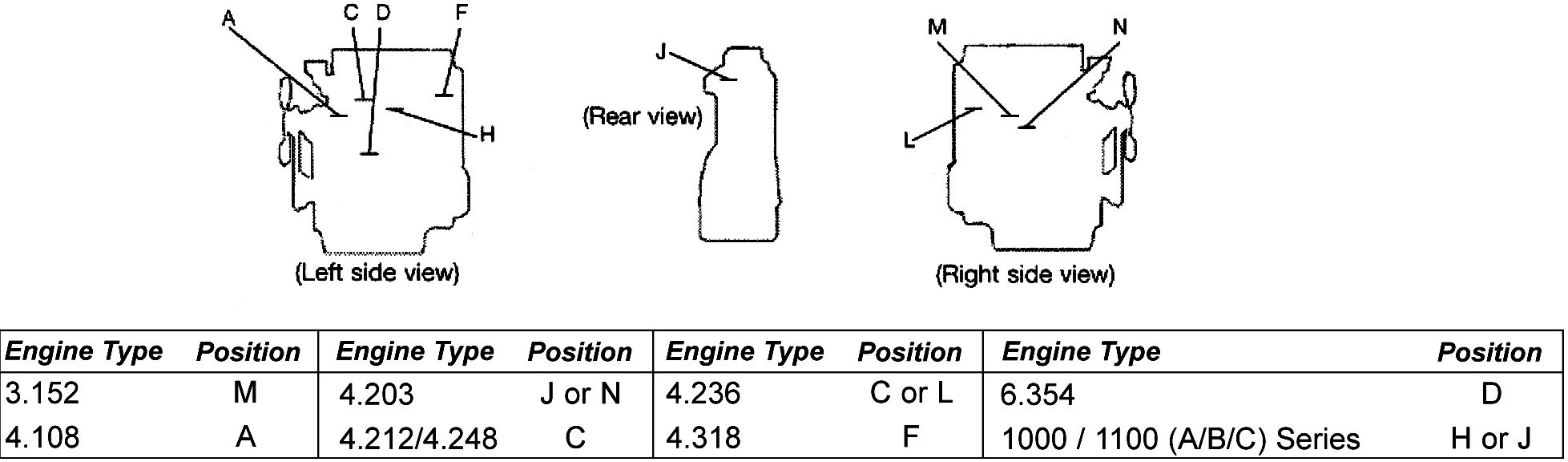
Where to find your Engine Number
How to Read Post-1978 Perkins Engine Numbers
Post-1978 Perkins engine numbers follow a structured sequence detailing family type, build specs, production sequence, and year of manufacture.
A standard post-1978 number breaks down into five key elements:
- Engine Model / Series: The overarching engine group
- Family / Type Code: The two-letter prefix matching the engine model in the code table
- Build Spec Code: Numerical digits identifying specific internal configurations and auxiliary components
- Serial / Production Sequence:The unique production sequence number for the individual engine block
- Year Code: A trailing letter code indicating the calendar year of manufacture
Where to Find a Perkins Engine Number
Perkins engine numbers may appear on an identification plate, label, or stamped area on the cylinder block. Do not assume the number is in the same location on every Perkins engine. Placement can vary by engine family, equipment manufacturer, application, and prior service history.
- Engine Data Plate: Typically riveted to the side of the cylinder block or valve cover.
- Machined Block Pads: Stamped directly into a flat pad on the left or right side of the engine block.
- Fuel Injection Pump Area: Machined pads adjacent to the fuel injection pump mounting flange.
- Rear Block Flange: Near the flywheel housing or major mounting faces.
- Remanufactured Tags: Secondary metallic tags applied during previous overhaul or remanufacturing processes.
If the engine plate is missing or illegible, capture clear photos of the cylinder block casting numbers, fuel system setup, and visible stampings. Technical support can assist in narrowing down the configuration using bore diameter, piston markings, and gasket profiles.
Perkins Engine Family and Type Codes
Use this table to match the family or type code to the related Perkins engine model. This table is not a final ordering reference by itself. Always confirm the complete engine number, application, and build details before selecting an engine rebuild kit or replacement part.
| AA |
1004.40 |
CN |
T3.152.4 |
HR |
404C-22T |
PK |
1106C-E66TA |
UF |
804C-33T |
| AB |
1004.40T |
DC |
1103C-33 |
JD |
4.203 |
RE |
1104C-44 |
UK |
804D-33 |
| AC |
1004.40T |
DD |
1103C-33T |
JE |
D4.203 |
RF |
1104C-E44 |
UL |
804D-33T |
| AD |
1004.40TW |
DE |
1103C-33TA |
JF |
G4.203 |
RG |
1104C-44T |
VK |
1106C-E60TA |
| AE |
1004.40 |
DF |
1103B-33 |
JG |
4.203.2 |
RH |
1104C-E44T |
XK |
1103D-33 |
| AG |
1004.40 |
DG |
1103B-33T |
KR |
104.22 |
RJ |
1104C-44TA |
XL |
1103D-33T |
| AH |
1004.40T |
DJ |
1103A-33 |
LA |
4.212 |
RK |
1104C-E44TA |
XM |
1103D-33TA |
| AJ |
1004.40 |
DK |
1103A-33T |
LD |
4.236 |
RR |
1104A-44 |
YA |
1006.60 |
| AK |
1004.40T |
ED |
4.108 |
LE |
G4.236 |
RS |
1104A-44T |
YB |
1006.60T |
| AL |
1004.40TA |
GK |
403D-15 |
LF |
4.248 |
RT |
1104A-44TA |
YC |
1006.60T |
| AM |
1004.40T |
GL |
403D-15T |
LG |
4.248.2 |
TC |
6.354 |
YD |
1006E-60T |
| AP |
1004.40 |
GN |
404D-22 |
LH |
C4.236 |
TE |
T6.354 |
YE |
1006.60 |
| AQ |
1004.40T |
GP |
404D-22T |
LJ |
T4.236 |
TG |
6.354.1 |
YG |
1006.60 |
| AR |
1004.42 |
GR |
404D-22TA |
NC |
4.318 |
TH |
T6.354.1 |
YH |
1006.60T |
| AS |
1004.42 |
GS |
403D-17 |
NH |
1104D-E44T |
TJ |
6.354.2 |
YJ |
1006.60TA |
| AT |
1004.40TA |
GU |
403A-15 |
NJ |
1104D-E44TA |
TK |
C6.354.2 |
YK |
1006.60TW |
| CD |
3.152 |
GV |
404A-22 |
NK |
1104D-44 |
TT |
TC6.354.1 |
|
|
| CE |
D3.152 |
HL |
403C-15 |
NL |
1104D-44T |
TU |
T6.354.4 |
|
|
| CF |
G3.152 |
HM |
403C-17 |
NM |
1104D-44TA |
TW |
6.354.4 |
|
|
| CM |
3.152.4 |
HP |
404C-22 |
PJ |
1106D-E66TA |
UE |
804C-33 |
|
|
Engine Feature Suffix Keys:
- A: Air Cooled
- C: Compensated
- D: Direct Injection
- E: Electric
- G: Gasoline
- T: Turbo
- W: Water Cooled
Year of Manufacture Code
| A |
1974 |
G |
1980 |
N |
1986 |
W |
1992 |
D |
1998 |
K |
2003 |
T |
2009 |
| B |
1975 |
H |
1981 |
P |
1987 |
X |
1993 |
E |
1/1/99-3/31/99 |
L |
2004 |
U |
2010 |
| C |
1976 |
J |
1982 |
S |
1988 |
Y |
1994 |
F |
4/1/99-12/31/99 |
M |
2005 |
V |
2011 |
| D |
1977 |
K |
1983 |
T |
1989 |
A |
1995 |
G |
2000 |
N |
2006 |
W |
2012 |
| E |
1978 |
L |
1984 |
U |
1990 |
B |
1996 |
H |
2001 |
P |
2007 |
X |
2013 |
| F |
1979 |
M |
1985 |
V |
1991 |
C |
1997 |
J |
2002 |
R/S |
2008 |
Y |
2014 |
Use this table only when the year code applies to the number format you are reviewing. If the engine has been rebuilt, replaced, or remanufactured, the equipment year and engine year may not match.
Common Engine-Identification Mistakes
Avoid these common errors when submitting engine information for quotes or orders:
- Submitting Partial Numbers: Shortened model numbers lack build spec detail. Always submit the entire stamped alphanumeric sequence.
- Confusing Equipment Codes with Engine Serial Numbers: Machine chassis tags for brands like Caterpillar, JCB, or Massey Ferguson do not reflect Perkins internal engine build codes. Record numbers directly off the engine block.
- Character Transposition Errors: Inspect stampings closely to avoid confusing 0 (zero) with O, 1 (one) with I, or 5 with S.
- Providing Component Casting Numbers: Numbers cast into exhaust manifolds, valve covers, or cylinder heads represent individual castings, not the engine serial number.
- Overlooking Non-Factory Repowers: Equipment records often list the original factory engine specs. If the machine was repowered, verify the actual engine currently installed in the chassis.
- Ordering Based Solely on Family Name: A two-letter family code establishes the series, but the numerical build code determines piston pin diameters, liner flange heights, and gasket configurations.
Information to Provide When Requesting Parts
Include the following technical data when submitting a parts inquiry or quote request:
- High-resolution photo of the engine data tag or block stamping
- Complete engine serial number typed in text format
- Machine make, model, and serial number
- Operating application (industrial, ag, construction, power gen, marine)
- Existing Maxiforce or OEM part numbers (if applicable)
- Internal measurements (bore size, piston ring width, journal diameter) if requested by technical support
- History of prior engine overhauls or remanufacturing modifications
Find Perkins Diesel Engine Parts with Maxiforce
Maxiforce supplies commercial-grade aftermarket engine components for Perkins industrial and agricultural diesel engines. Our inventory includes in-frame and out-of-frame overhaul kits, pistons, ring sets, cylinder liners, main/rod bearings, complete gasket sets, crankshafts, water pumps, oil pumps, fuel injectors, and valvetrain components.
Cross-reference your engine specifications using the Perkins Engine Application Chart, browse the Perkins replacement-parts catalog, or Contact Maxiforce Support for direct fitment verification.
FAQs: Perkins Engine Identification
1. Where is the Perkins engine number located?
The Perkins engine number may be on an identification plate, label, or stamped area on the engine. Location can vary by engine family and application, so check the engine itself and provide a clear photo when requesting support.
2. Is the equipment serial number the same as the Perkins engine number?
No. The equipment serial number identifies the machine, while the Perkins engine number identifies the engine. Maxiforce may ask for both, but the engine number is usually needed to confirm parts compatibility.
3. Why does Maxiforce need the complete Perkins engine number?
Maxiforce needs the complete number because similar Perkins engines can use different internal parts, rebuild kits, and components. The full number helps confirm the correct engine family, build information, and application details.
4. What should I do if the engine plate is missing or unreadable?
Take clear photos of any stamped numbers, engine tags, casting marks, existing part numbers, and the full engine. Then contact Maxiforce with the equipment make, model, application, and any known rebuild or replacement history.
5. Can I order Perkins parts using only the engine family or type code?
The family or type code can help narrow the engine model, but it should not be the only detail used for ordering. Provide the complete engine number and application before selecting a kit or component.
6. What information helps Maxiforce identify the right Perkins parts?
Send the complete engine number, a clear photo of the number, equipment make and model, application, and any known Maxiforce part number, OEM reference number, kit number, bore, piston, or build details.