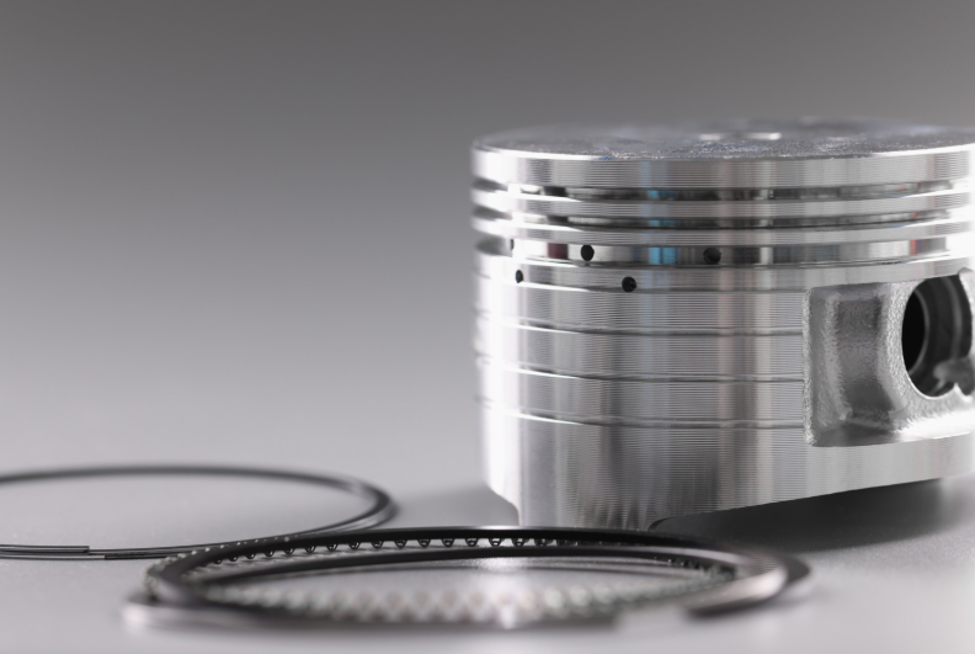
If you’ve already confirmed blow-by or high oil consumption, the next question is whether new piston rings alone will fix it. New piston rings may reduce blow-by and oil consumption, but they won’t fix cylinders that are worn beyond the manufacturer’s specifications. If the cylinder bores have excessive taper, out-of-round wear, or deep scoring, the repair may also need new pistons, cylinder liners, or other internal components.
The decision to re-ring or rebuild a diesel engine should start with cylinder measurements, not a parts order. Knowing the differences between ring sets, piston kits, cylinder kits, and overhaul kits can help you choose the right repair without replacing parts you don’t need. If you’re still deciding whether the engine needs major work, start with 5 Warning Signs Your Engine Needs an Overhaul.
When Is Replacing Piston Rings Enough?
A re-ring involves installing new piston rings on existing pistons. These rings seal the combustion chamber, control oil on the cylinder walls, and transfer heat from the piston to the cylinder wall.
Replacing piston rings may be enough when:
- Cylinder bores measure within the manufacturer’s wear limits for diameter, taper, and out-of-round.
- Cylinder walls have no deep scoring or damage.
- Pistons show no cracks or skirt damage, and ring groove clearance is within specification.
- The cylinder surface can be honed to the finish the manufacturer requires.
- Bearings and other internal parts don’t need replacement during the same teardown.
Why Do New Piston Rings Fail in Worn Cylinders?
Piston rings need the correct cylinder dimensions and surface finish to create an effective seal. When the cylinder walls wear unevenly, new rings may not maintain consistent contact with the bore.
Two common types of cylinder wear are taper and out-of-round wear.
Cylinder taper occurs when the bore is wider at the top than at the bottom. The top of ring travel usually wears the fastest because it sees the most combustion heat and pressure. In a tapered bore, the rings have to expand and contract on every stroke, which can make sealing harder.
Out-of-round wear occurs when the cylinder becomes slightly oval instead of round. A round ring can’t press evenly against an oval wall, so gaps can form where combustion gas and oil slip past.
Installing new rings in worn cylinders may lead to:
- Continued combustion gas leakage past the rings
- Ongoing oil consumption
- Rings that don’t seat properly
- Uneven or premature ring wear
- A second teardown to fix the cylinder wear that was missed the first time
Cylinder surface condition also matters. Deep scoring, glazing, or an unsuitable surface finish may prevent new rings from seating properly.
Honing may help prepare a serviceable cylinder bore for new rings. However, ordinary honing cannot reliably correct excessive taper, severe out-of-round wear, or deep scoring. Those conditions may require cylinder machining or liner replacement, depending on the engine design.
How Should You Check Cylinder Wear Before Replacing Rings?
Before choosing replacement parts, a qualified technician should inspect and measure the cylinder bores using the engine manufacturer’s service specifications.
A visual inspection can spot obvious damage, but only measurements can confirm whether the cylinders can be reused.
Measure Cylinder Bore Diameter
A dial bore gauge or another suitable precision measuring tool can be used to check cylinder diameter.
Technicians typically measure each bore at the top, middle, and bottom of ring travel, then repeat those readings 90 degrees apart (in line with the crankshaft and across it).
- Top vs. bottom readings show taper.
- Readings in the two directions at the same height show out-of-round.
- All readings compared with the standard bore size show overall wear.
These measurements help determine whether the cylinder can be reused, needs machining, or needs a replacement liner.
Inspect the Cylinder Wall Surface
Cylinder walls should be checked for scoring, glazing, and other damage. A noticeable ridge at the top of the bore, above where the rings travel, can also point to heavy wear.
A cylinder may look smooth but still have an unsuitable surface for new piston rings.
Depending on the engine and cylinder condition, proper honing or another manufacturer-approved surface preparation process may be necessary.
Check Piston and Ring Groove Condition
The technician should check the pistons for damage, wear, and excessive ring groove clearance. Groove clearance is commonly checked by placing a new ring in the groove and measuring the side gap with a feeler gauge.
Worn ring grooves may prevent new rings from operating correctly, even when the cylinder bore remains within specification.
Piston skirt condition and piston-to-cylinder clearance should also be checked.
Measure Piston Ring End Gap
Ring end gap is the space between the ends of a piston ring when it is positioned inside the cylinder bore.
The gap must meet the engine manufacturer’s specifications.
If the gap is too large, sealing performance may suffer. If it is too small, the ring ends may contact each other as the engine heats up, potentially causing damage.
Replacement ring end gaps should be checked in the cylinder where the rings will operate, with the ring squared in the bore and measured with a feeler gauge, following the manufacturer’s procedure.
Ring Sets, Piston Kits, Cylinder Kits, and Liners: What’s the Difference?
Each option covers a different share of the cylinder repair.
Piston Ring Sets
A piston ring set contains replacement rings for a piston or specified engine application.
These generally include compression rings and an oil control ring, although the exact arrangement varies by engine.
Ring sets fit repairs where the existing pistons and cylinder bores pass inspection. They do not correct worn piston grooves, damaged pistons, or cylinders that exceed the manufacturer’s wear limits.
Piston Kits
A piston kit generally includes a piston and related components, which may include piston rings, a wrist pin, and retaining clips.
Exact contents vary by manufacturer and part number.
Piston kits may be needed when existing pistons have damaged ring grooves, worn skirts, or other conditions that prevent reuse.
However, new pistons must still match the finished cylinder diameter and required clearances.
Cylinder Kits
A cylinder kit may combine several components needed to repair one cylinder.
Depending on the application, it may include:
- Piston
- Piston rings
- Cylinder liner
- Wrist pin
- Retaining clips
- Related seals
Cylinder kits are common for engines with replaceable liners because the piston, rings, and liner can be replaced together as one set.
However, not every cylinder kit contains the same parts. Always confirm the contents before ordering.
Cylinder Liners and Liner Kits
Cylinder liners provide the working surface against which the piston rings operate.
Some diesel engines use replaceable wet or dry liners.
Wet liners have an outer surface that comes into direct contact with engine coolant. They generally require seals to prevent coolant leakage.
Dry liners are fitted into the engine block and do not have direct contact with the coolant.
A liner kit may contain the liner and related seals or other components, depending on the application. It does not necessarily include a piston or piston rings.
Other diesel engines have cylinders machined directly into the engine block rather than replaceable liners.
When a liner is worn beyond specification, replacement may be necessary. For engines without replaceable liners, cylinder machining or another manufacturer-approved repair may be required.
Which Replacement Parts Should You Choose Based on Cylinder Wear?
Use this table to match common inspection findings to a starting point for parts.
| Inspection Finding |
Repair Option to Consider |
| Worn rings, with pistons and cylinder bores within specification |
Piston ring set |
| Damaged piston or worn ring grooves, with a serviceable cylinder bore |
Piston kit |
| Replaceable cylinder liner worn beyond specification |
Cylinder kit or liner kit |
| Bore worn beyond specification on an engine without replaceable liners |
Machining to an approved oversize, plus matching oversize pistons and rings |
| Pistons, liners, bearings, and gaskets all need replacement |
In-frame kit or overhaul kit |
| Cylinder block machining or extensive internal repairs required |
Out-of-frame rebuild |
These are general repair considerations. Final decisions should follow the engine manufacturer’s service specifications and the technician’s inspection findings.
The goal is to replace the parts that no longer meet specifications without overlooking related wear.
What Do 0.50 mm and 1.00 mm Oversize Engine Parts Mean?
When shopping for replacement pistons and piston rings, you may see parts labeled 0.50 mm or 1.00 mm oversize.
These measurements generally indicate an increase over the engine’s standard piston or cylinder bore size.
For example, suppose an engine has a standard cylinder bore diameter of 100.00 mm.
If the manufacturer supports these repair sizes:
- Standard size: 100.00 mm bore
- 50 mm oversize: 100.50 mm bore
- 00 mm oversize: 101.00 mm bore
These figures are illustrative. Actual dimensions and available repair sizes depend on the engine model.
Oversize pistons and rings are commonly used when a cylinder has been bored and finished to an approved larger diameter.
A 0.50 mm oversize designation does not mean the piston-to-cylinder clearance should be 0.50 mm. The required clearance is a separate measurement specified by the engine manufacturer.
Can You Install Oversize Rings Without Boring the Cylinder?
Oversize piston rings should not be installed in a standard-size cylinder simply to compensate for cylinder wear unless the engine manufacturer specifically approves that repair.
The piston, rings, and finished cylinder bore must work together within the required specifications.
Installing incorrectly sized rings can create improper end gaps, sealing problems, or mechanical damage.
Also, a 0.50 mm oversize piston does not automatically match every 0.50 mm oversize ring set.
Compatibility depends on the engine application, piston design, ring dimensions, and part specifications.
Oversize and undersize parts are also different. Oversize commonly refers to piston and cylinder bore dimensions, while undersize commonly refers to bearings designed for crankshaft journals that have been machined smaller.
When Is a Full Engine Rebuild Better Than a Re-Ring?
A larger rebuild may be more practical when inspection shows that replacing the rings alone would leave other worn components in place.
For example, an engine may have excessive cylinder taper, damaged piston ring grooves, and bearing clearances outside specification.
Replacing only the rings would not address these other problems.
Labor matters too. A re-ring already means removing the cylinder head and pistons. If other parts are close to their wear limits, replacing them during the same teardown can save you from paying for that labor twice.
A rebuild may involve replacing or repairing several components, including pistons, rings, liners, bearings, gaskets, and seals.
When Should You Consider an In-Frame Overhaul?
An in-frame overhaul involves repairing selected engine components while the engine remains installed in the equipment.
Depending on the engine design and available service access, this may include replacing pistons, rings, liners, and bearings.
An in-frame repair may be practical when the required components can be serviced without removing the engine and the remaining assemblies meet specifications. It’s often an option on engines with replaceable wet liners, since the liners can be removed from the top of the block.
However, not every engine or repair can be handled in-frame.
When Is an Out-of-Frame Rebuild Necessary?
An out-of-frame rebuild involves removing the engine from the equipment for more extensive inspection, machining, or repair.
This approach may be necessary when the cylinder block, crankshaft, or other components require work that cannot be completed properly with the engine installed.
For example, a cylinder block that requires precision machining may need to be removed and sent to a machine shop.
When Does an Engine Overhaul Kit Cost Less Than Buying Parts Separately?
An engine overhaul kit may offer better parts value when several major components need replacement during the same repair.
Instead of purchasing pistons, rings, bearings, gaskets, and seals separately, a technician or equipment owner can source many required components together.
To compare costs:
- List every part the inspection says you need, such as pistons, rings, liners, bearings, and gasket sets.
- Price each part individually and add up the total.
- Compare that total with the kit price, and check which of your listed parts the kit includes.
- Add the cost of any needed parts the kit leaves out.
An overhaul kit may offer several advantages:
- Simpler ordering: Multiple components may be available under one kit part number, which can mean fewer separate orders.
- Matched to one application: Kit parts are selected for the same engine application, which can reduce the risk of ordering a mismatched component.
- Easier repair planning: Kit contents can help organize the parts required for the overhaul.
- Potential cost savings: A kit may cost less than purchasing the same included components individually.
However, an overhaul kit is not automatically the lowest-cost option.
If the pistons and cylinders remain within specification and only the rings need replacement, purchasing ring sets may be more economical.
Also factor in shipping, machining, and labor, since a kit covers parts but not shop work.
Maxiforce offers engine kits for many diesel engine applications, including in-frame kits and overhaul kits.
For engine-specific options, see Cummins® engine overhaul kits and Caterpillar® engine overhaul kits.
Comparing the available kit contents against the components identified during inspection can help you choose a suitable parts package.
How Do You Choose the Right Replacement Parts for Your Engine?
Before ordering piston rings or an engine rebuild kit, gather the information needed to identify the correct components.
Start with the engine identification plate and record:
- Engine manufacturer and model: Identify the exact engine family and model designation.
- Engine serial number: Use the serial number to help confirm the correct parts configuration.
- Additional engine identification: Record the CPL for applicable Cummins engines or other manufacturer-specific identification numbers.
- Cylinder measurements: Confirm the finished bore size and whether standard or oversize parts are required.
- Required replacement components: Determine whether the repair calls for rings, pistons, liners, bearings, or a larger kit.
- Existing part numbers: Record available OEM reference numbers to help identify compatible replacements.
Two engines with similar model names may not use identical pistons, rings, or liners, because of production changes and application differences. Matching replacement parts by appearance or engine displacement alone is not reliable.
Get the Right Parts for Your Re-Ring or Rebuild With Maxiforce
Once your measurements show what needs replacing, Maxiforce can help you match the parts to your engine. Maxiforce supplies aftermarket diesel engine parts, including piston rings, pistons, cylinder liners, bearings, gaskets, and engine rebuild kits, with immediate shipping on available inventory from three U.S. distribution centers.
Search Maxiforce engine kits, or contact Maxiforce technical support with your engine model, serial number, CPL or OEM reference number, and cylinder measurements for help confirming the correct parts.